

Earlier this spring, Shopify opened native B2B to Basic, Grow, and Advanced plans. Company profiles, custom catalogs, payment terms, volume pricing — all of it, no extra cost. Big, genuinely useful change.
Combined Listings — the data model behind grouped product catalogs — stayed Plus-only.
I noticed because I just shipped a B2B bulk-ordering grid on Plus: ~200 lines of Liquid faking “these fifty color-products belong together” through SKU naming and a metafield of product references. The kind of glue every agency in this space has reinvented.
Combined Listings replaces that shape — separate, fully independent products grouped under one listing, different URLs, different stock, different prices. The docs market it as a swatch feature. The actual primitive is the data model behind every grouped-catalog workaround. And it’s still a Plus-shaped privilege.
Key takeaways
- The April 2026 gap is real. Shopify opened native B2B to every paid plan. Combined Listings — the closest thing Shopify has shipped to a grouped-catalog primitive — stayed Plus-only.
- One parent listing, many independent children. Parent has no inventory and isn’t purchasable. Children keep their own URLs, stock, and images. (Documented.)
- Hard limits to design around: 60 children per parent, 2,000 total variants, 3 shared options, Plus only, Online Store channel only. No POS, no subscriptions, no nesting, no bundles.
- Data model: native. Experience layer: not. No theme-editor order grid, no quantity matrix, no B2B-aware section. That part is still on you, your agency, or an app.
- What merchants are actually hitting (per the Combined Listings app reviews): collection-page color filters break, reordering options doesn’t update the default variant, no bulk import/export, legacy themes need version 15.0.0+ to render swatches.
- My bet: within 18–24 months something native lands on top — a section, a configurator, cart-page grouping. Wrong on timing or shape is possible. The primitive being here at all is what matters.
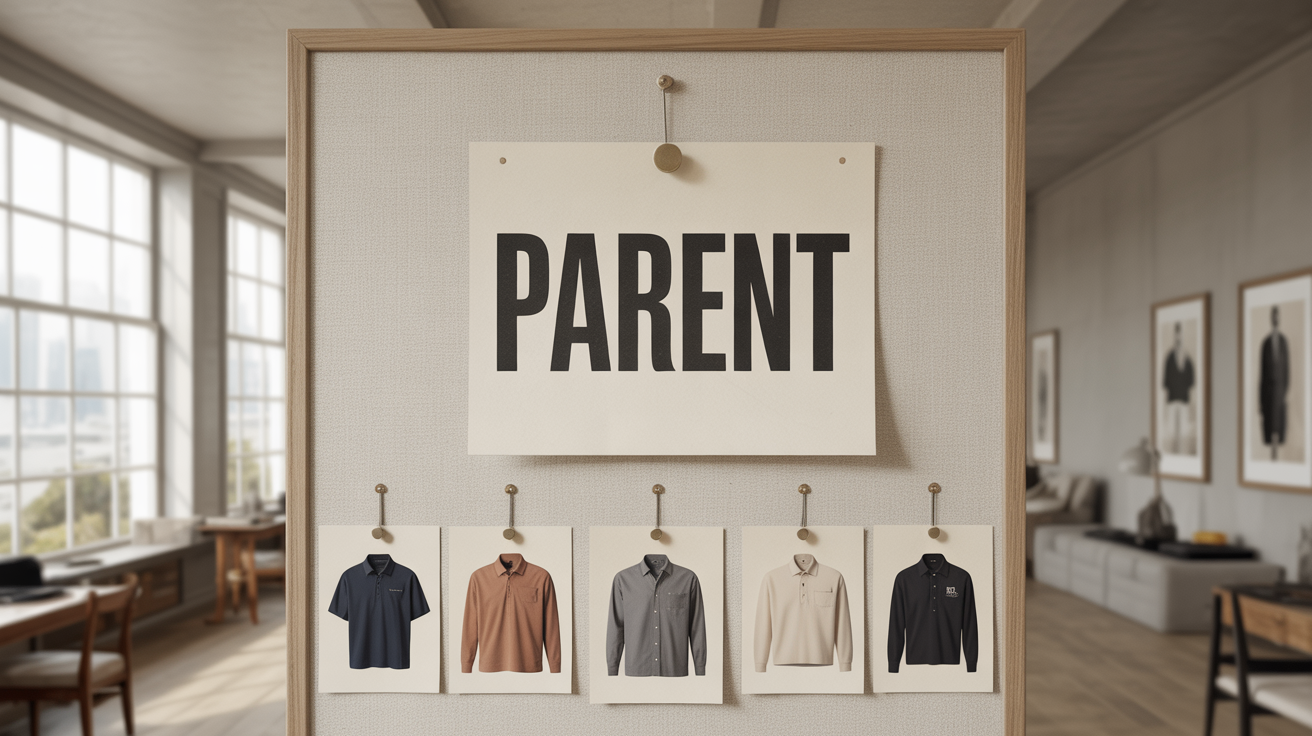 One parent. Many children. Each child is a real product. The parent is just the shop window.
The whole primitive, in one paragraph
A parent listing-only product (no inventory, not purchasable) groups up to 60 child products that keep their own URLs, variants, stock, and images. Up to 2,000 total variants across children. 3 shared options on the listing. Relationship is managed through the combinedListingUpdate mutation. Plus only. Online Store channel only. No POS, subscriptions, nesting, or bundles. (Build docs.)
The canonical docs example is apparel: “a shoe that comes in three colors and ten sizes,” with each color modelled as a separate product. Which is — and this is my read, not Shopify’s claim — the exact shape every B2B apparel catalog has been faking with custom code for years. Separate color-products grouped for the buyer, sized at the variant level. The docs don’t market this as a B2B feature. The shape doesn’t care.
What merchants are actually hitting (the unglamorous part)
The data model is clean. The day-to-day is rougher than the launch post suggests. Four things keep coming up across the Shopify dev forums and the Combined Listings app reviews:
Collection-page color filters break. Children can’t carry a color option themselves — the color variant gets generated at the parent level. The Shopify Search & Discovery filter doesn’t include child products of a Combined Listing in the results. For an apparel store where the color filter is the most-used filter on the site, this is a real regression. Worth pricing in before you migrate.
Reordering options doesn’t update the default variant. A documented behaviour in the Combined Listings app reviews: if you reorder children in admin to control which one shows first on the listing, the order of options changes but selected_or_first_available_variant doesn’t follow. So “swap the hero color for spring” turns into a code workaround instead of a drag-and-drop in admin.
No bulk import/export, no multi-select setup. Every Combined Listing is built by hand in admin. For a catalog with eighty styles in twelve colors, that’s ~80 listings to set up one at a time. Workable for ten styles, painful at scale.
Legacy themes don’t render swatches without theme work. Per Shopify support guidance in the app reviews, themes need to be on version 15.0.0 or higher to render the combined_listing Liquid object correctly. Older or heavily customised themes need theme-side updates before swatches and galleries display. So “turn it on and it just works” assumes a theme baseline a lot of established stores aren’t on.
None of these are dealbreakers. All of them are the kind of thing you want to know before you scope a migration, not during it.
What’s missing — and the window that creates
There’s a bigger gap on top of the day-to-day friction: no native experience layer. The docs describe the data model. They don’t describe a B2B order-grid section, a quantity matrix, or a cart-page grouping behaviour. The UX on top is still build-or-buy.
My bet: when a platform ships a clean data primitive, the merchandising layer usually follows — within 18–24 months I’d expect something native (a section, a configurator, a cart-grouping behaviour). Prediction, not a roadmap claim. I’ve been wrong about platform timing before.
If that prediction lands, the grouping part of an order-grid app’s value gets absorbed. The buyer-workflow part — saved orders, repeat-order templates, CSV paste — is harder to absorb. Data model migration is one project. Buyer workflow value is a different project. Don’t conflate them.
What to do now
On Plus, product families in your catalog: spin up a dev store. Model one family as a Combined Listing end-to-end — admin, storefront, search, B2B catalogs. Cheap learning. Two things to verify there: (1) B2B catalog pricing per child works the way you’d expect (the docs don’t spell it out), and (2) your migration plan handles the SEO shift, since the parent listing becomes the customer-facing PDP and the existing per-colorway pages need redirect/canonical decisions.
On Plus, already running a grouped-catalog setup: open a friendly conversation with whoever built it. Ask how their approach interacts with Combined Listings. Planning early beats reacting in peak season.
On Basic, Grow, or Advanced doing B2B: you have catalogs and company accounts now, but not Combined Listings. If grouped product families are central to how your buyers shop, that’s still a reason to weigh Plus — alongside everything else on that decision.
One open question
If Combined Listings is the data model, where does the experience layer land first?
- A theme-editor section that reads the parent and renders children as a grid?
- A B2B-specific configurator wired into Plus catalogs?
- Cart-page grouping that recognises Combined Listing relationships and consolidates rows automatically?
- None of the above — Shopify treats the primitive as merchandising-only and leaves B2B UX to apps?
My bet is the first one inside two years. Curious which one you’d put money on — especially if you’re closer to Shopify’s B2B roadmap than I am.
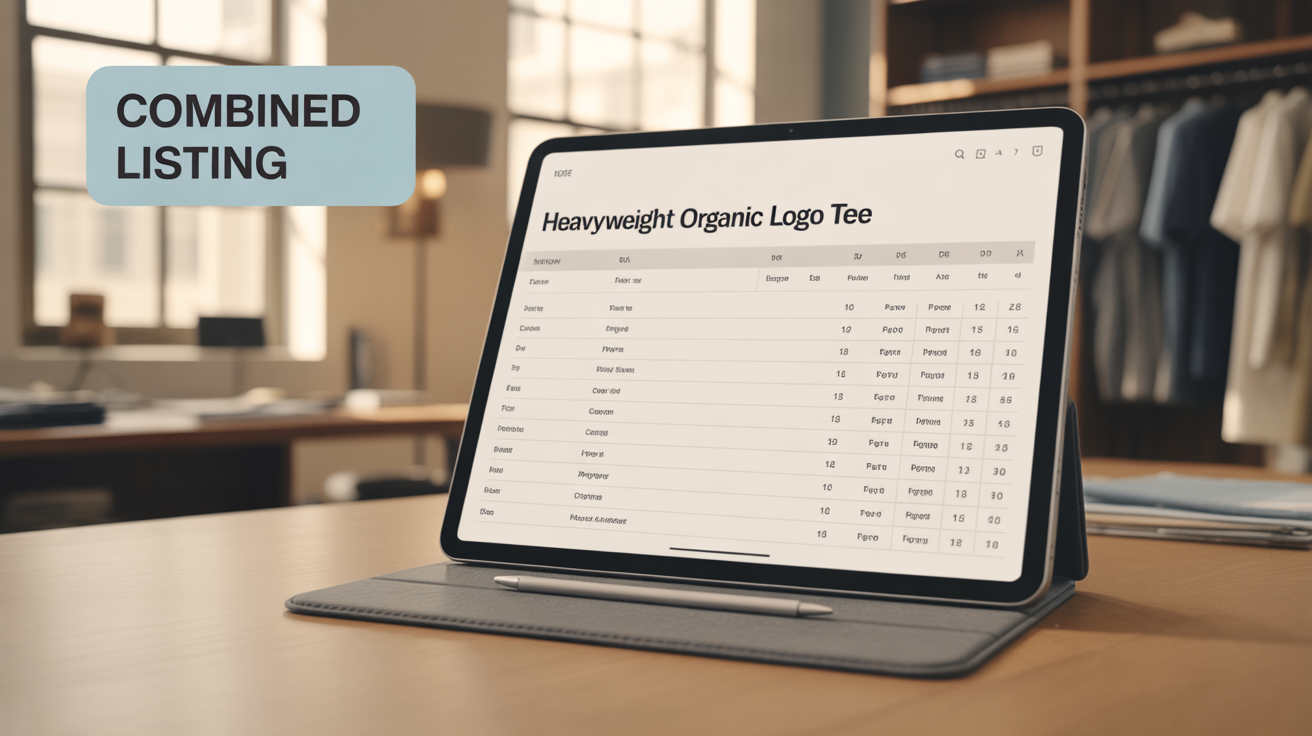 My guess at one possible shape: a native section that reads the Combined Listing primitive and renders rows of children with size columns, totals, and a single Add to cart. Not a leaked design. Not a roadmap. Just where I’d point if Shopify asked.
Takeaway
Shopify opening B2B to every paid plan was the headline. The Combined Listings carve-out is the part nobody’s writing about — and it’s the one that decides how grouped catalogs get built on Shopify for the next two years.
Frequently asked questions
What is Shopify Combined Listings and how does it differ from variants?
A Shopify Plus feature that lets one parent product act as a listing for multiple independent child products. Variants share one product record and one inventory. Combined Listing children are separate products — own URLs, own stock, own images. The parent is a listing wrapper; it isn’t purchasable.
Does Combined Listings work with B2B catalogs and per-buyer pricing?
The official Combined Listings docs don’t explicitly cover B2B catalog interaction. Each child is a regular Shopify product, so it’s reasonable to expect catalog pricing rules apply at the child level — but verify it end-to-end in a development store before relying on it for production. Don’t treat this as a documented guarantee.
Does Combined Listings replace the need for a B2B order grid app?
Not on its own. It gives you the grouping — not the grid UX, quantity matrix, or bulk add-to-cart flow. Apps and custom builds still fill that gap. Whether that changes depends on Shopify’s roadmap.
What are the hard limits of Combined Listings?
Per current Shopify docs: up to 60 child products per parent, up to 2,000 total variants across children, up to 3 shared options on the listing. Shopify Plus only. Online Store channel only. No POS, subscriptions, nesting, or bundles. Always re-check the live docs — these can change.
What problems do merchants actually hit with Combined Listings?
Four come up repeatedly in the Combined Listings app reviews. Collection-page color filters break because children can’t carry a color option, and Shopify Search & Discovery doesn’t include the children in filter results. Reordering options in admin changes the option order but doesn’t update selected_or_first_available_variant, so changing which child appears first as the default needs a code workaround. There’s no bulk import or multi-select setup, so every listing is configured by hand in admin. Themes need to be on version 15.0.0 or higher to render the combined_listing Liquid object correctly — older themes need theme-side updates before swatches and galleries display. None are dealbreakers; all are worth pricing in before a migration.
Is Combined Listings available on Advanced or other non-Plus plans?
No. As of April 2026, Combined Listings remains Shopify Plus and enterprise only. Some core B2B features (catalogs via Markets, company profiles, volume pricing) recently became available on Basic, Grow, and Advanced — but Combined Listings was not part of that change.
Should I migrate my Shopify Plus catalog to Combined Listings right now?
Not as a rush project. Model one family in a sandbox first. Watch how it behaves in admin, storefront, and B2B catalogs. If you have an existing grouped-catalog setup, loop in whoever built it. Migration is a decision for you and your build partner — not a blog post.
Building on Shopify Plus B2B?
If you’re weighing Combined Listings against a custom build, or planning a Plus migration that touches grouped catalogs, let’s trade notes. I’m always up for having my interpretations corrected by people closer to the work.
Developer-focused companion piece: Shopify B2B Bulk-Ordering Grid Without an App: A Developer’s Playbook.